Good morning, it’s まさきん.
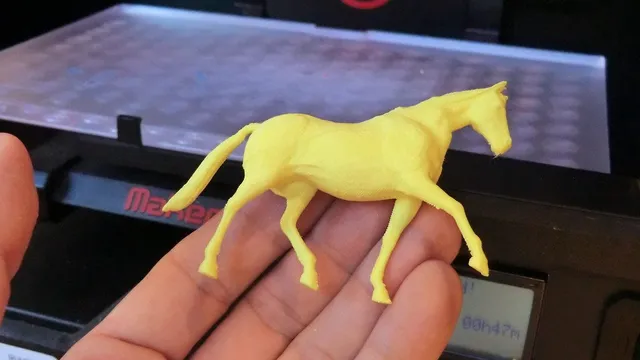
I touched on this briefly in my post about Gridfinity storage, but we have a 3D printer at home. This time I want to write about picking the right filament.
Honestly, choosing the material turns out to be trickier than the printer itself. I’m using a small Bambu Lab A1 mini, and this post is built around what I’ve learned with it.
I’ve also written about projects I made with my kids and trying an outsourced print service before buying the printer, so check those out too if you’re curious.
PLA is the safe first choice
Whenever people start 3D printing, PLA is usually the first material they touch. It’s made from polylactic acid, has little smell, and is easy to work with.
It’s reasonably strong too, plenty for most household uses. That said, it’s weak against heat and starts deforming around 60°C, so it’s not great for leaving in a hot car.
The first spool I bought was a standard “PLA Basic,” about ¥2,465 per kg. It was more than enough for practical things like storage dividers and parts for the kids’ craft projects.
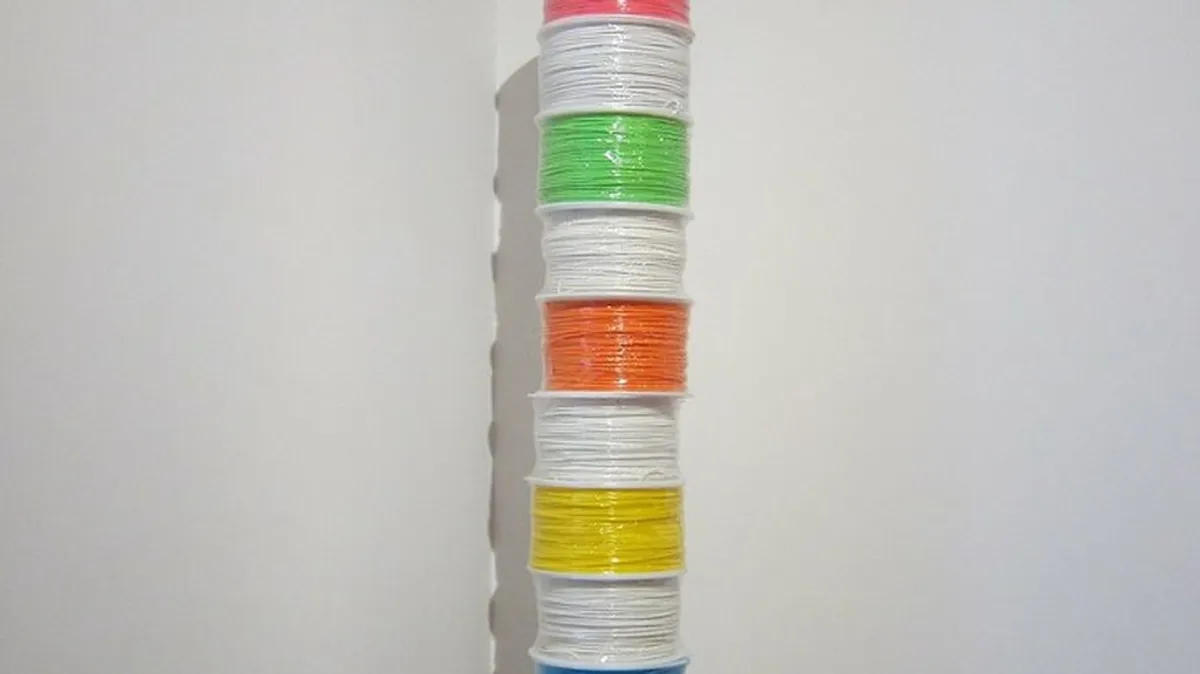
My second pick was “PLA Silk Multi Color,” a slightly pricier spool. What’s fun is that a single spool prints out a rainbow-like gradient.
Getting that effect without an extra multi-color unit is a nice bonus. That said, depending on the batch, the cross-section can be oval-shaped, which I’ve heard can jam more easily with automatic multi-color feeders. Feeding it directly into the printer seems to avoid that issue.
PETG or TPU: which one to pick
Once you’re comfortable with PLA, PETG and TPU are usually the next materials that catch your interest. They serve pretty different purposes, so here’s a quick comparison table.
| Item | PETG | TPU |
|---|---|---|
| Character | Tougher and less brittle than PLA | Soft, rubber-like texture |
| Heat resistance | Up to about 80°C | Varies by use |
| Good for | Parts used outdoors or in a car | Phone cases, non-slip feet |
| Printing caveat | Slightly more stringing | Jams easily without slow speed |
PETG holds up better against impact than PLA, reportedly about twice as tough in Charpy impact tests. For parts left outdoors or in a hot car during summer, I’d trust PETG more.
TPU, on the other hand, is a soft material around 95A hardness. It suits phone cases, bumpers, and non-slip feet.
That said, it jams easily through a multi-color unit, so direct feeding is basically a must. I also found it needs printing well under 80mm per minute to avoid jams. Taking it slow seems to be the trick with TPU.
Is a 0.2mm nozzle worth buying
The Bambu Lab A1 mini comes with a standard 0.4mm nozzle. Swapping it for a 0.2mm nozzle lets you print much finer detail.
The replacement hotend costs under ¥2,000 and swaps in seconds with no tools needed. I could also drop the layer height to 0.06mm, and the surface finish got noticeably smoother.
It seems well suited to miniatures, figures, and small logo plates where fine detail matters. That said, glitter-filled, marble-look, or wood-filled PLA, along with carbon-fiber PLA or PETG, tend to clog a 0.2mm nozzle easily.
If you’re planning to use any of those specialty materials, keeping the standard 0.4mm nozzle on hand is probably the safer bet.
Buying only once you actually need it
The 3D printing world feels like a bottomless pit where you keep wanting more materials and parts. That’s exactly why we’ve settled on an order for buying things.
We prioritize things like the 0.2mm nozzle first, since the benefit is immediate and it’s a one-time cost. PETG only gets bought once there’s a concrete plan to use it outdoors or in a car.
Same with TPU. We only reach for it once a plan for a soft part actually comes up. Stocking up ahead of time just seems to leave unused materials piling up on the shelf.
Our household caps hobby spending at around ¥2,000 a month, and filament comes out of that budget too. Just avoiding purchases without a clear use in mind makes that cap surprisingly easy to stick to.
Clicking this opens the Rakuten login page. Once you log in, you’ll see the campaign details.
A dry box isn’t necessary — silica gel does the job
Filament absorbs moisture, which can make prints come out rougher. Even so, I don’t think you need to jump straight to a dedicated dry box.
What I actually do is pair a sealable bag with reusable silica gel packs. At about ¥1,000 per kg, the color-change from blue to pink tells you when it’s time to recharge them.
A few minutes in the microwave brings them back to life, which is handy. Splitting them into small tea bags or dashi packs from the 100-yen shop makes it easy to portion out desiccant per spool.
This method covers me fine for mostly PLA use. That said, if print surfaces get rougher, stringing increases, or silk filament starts losing its shine, that might be the sign to consider a proper dry box. It’s worth keeping an eye on things especially during the rainy season.
Wrap-up
This time I wrote mainly about choosing filament as part of the 3D printing hobby. Sticking to “buy it once you actually need it,” for both materials and the nozzle, seems to keep unnecessary spending in check.
This mindset feels a lot like how I approach reviewing phone bills and fixed costs. Checking regularly whether you’re still paying for something you’re not using seems like a habit worth keeping, whether it’s a hobby or your monthly bills.
Switching to Rakuten Mobile is what got our household to review fixed costs in the first place, and I think that same “pay only for what you use” idea carries over to choosing hobby gear too. If this resonates, maybe start by reviewing your own monthly fixed costs.
Clicking this opens the Rakuten login page. Once you log in, you’ll see the campaign details.
This article contains affiliate advertising. If you sign up for a product or service through a link on this site, we may receive compensation from the partner company. The site operator is also an employee of Rakuten Group and may receive compensation through an employee referral program. The content and opinions here are based on the operator’s own experience and research regardless of any advertising relationship, but please read with the above in mind. See the Disclaimer & Affiliate Disclosure for details. Disclaimer & Affiliate Disclosure
This article includes machine-translated content. Please check the official Rakuten Mobile multilingual page for exact terms.
If you have concerns about Rakuten Mobile coverage or signal quality, you can consult through the official signal improvement request form .